
News and blogs

For many industrial operators, switching from traditional to drone-based inspections feels like a transition into the modern era of inspection capabilities. Drones offer a faster, safer way to keep a clear and comprehensive watch over critical assets in hard-to-reach places. But beyond the tech appeal lies a more strategic question: what’s the actual return on investment?
The answer, increasingly, is clear. Inspections using unmanned aerial systems (UAS) aren’t just more efficient - they deliver measurable savings across time, cost, and risk, all while improving the quality of your asset data. Whether you’re justifying a single scope, a pilot program, or a full rollout, understanding where the ROI comes from is essential.
The most immediate ROI comes from reducing the cost of traditional inspections. Rope access teams, scaffolding, cranes, and confined space entry protocols require labor, equipment, permits, and time. A single scaffolded inspection on a flare stack or tank can easily run into the tens of thousands, and weeks of work.
With drones, much of that overhead disappears. A UAS inspection team can often complete the same job in days or even hours, with minimal setup and fewer personnel. This brings inspection costs down significantly, especially when scaled across large or multi-site operations.
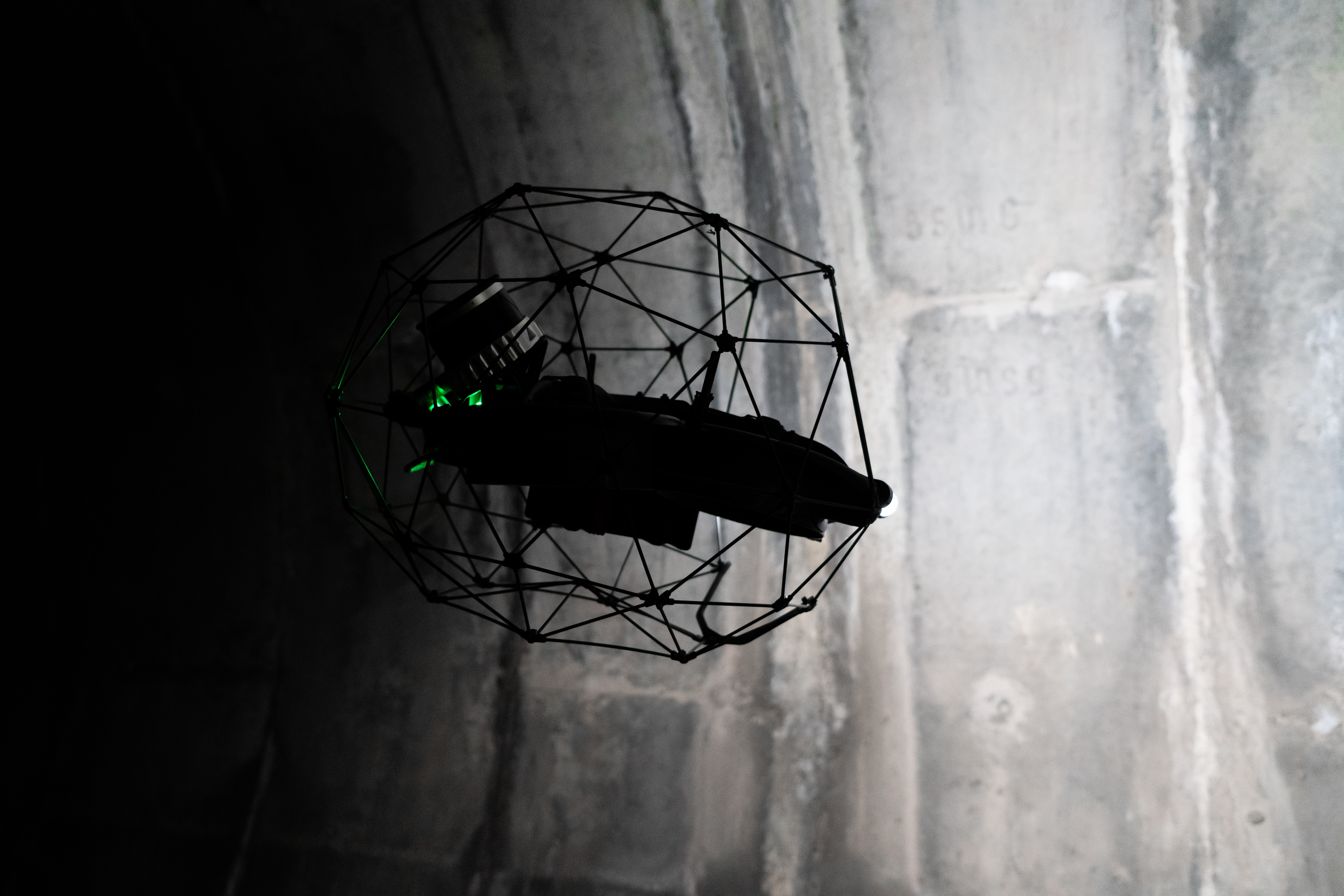
Downtime is where the ROI really starts to multiply. Traditional inspections often require partial or full shutdowns of equipment to ensure worker safety. That may mean halting production for several hours or even days - and every hour offline has a direct financial impact.
Drone inspections can often be completed while assets remain in operation. Flare stacks, cooling towers, boilers, and pressure vessels can be surveyed without interrupting flow. This non-intrusive approach keeps production running, reducing the opportunity cost of inspections and allowing maintenance to be scheduled with far more flexibility.

Every time you reduce the need for scaffolding, rope access, or confined space entry, you’re not just saving money - you’re reducing risk. This means fewer injuries, fewer insurance claims, and fewer regulatory headaches. Safety isn’t always calculated directly into ROI, but the impact is real and significant, especially when audits and compliance come into play.
In high-risk industries like oil and gas, even a single avoided incident can justify the investment in UAS technology.
Good inspection data leads to better decisions, which also feeds into ROI. UAS equipped with high-resolution cameras, LiDAR, thermal imaging, or methane detection sensors can collect detailed, repeatable data. This supports accurate condition monitoring, early fault detection, and more targeted maintenance planning.
Better data means fewer surprises. That translates into fewer emergency repairs, better use of maintenance budgets, and longer asset lifespans. Over time, these savings can far exceed the cost of drone hardware or service contracts.
The real strength of drone-based inspections is their ability to scale. When workflows are established and teams are trained, inspections can be scheduled more frequently, delivering better insights at lower cost. When integrated into a digital asset management system or paired with Cyberhawk’s AI-enabled analysis, drones become part of a predictive maintenance strategy, not just a replacement for manual checks.
This long-term approach creates compounding value. Assets stay healthier, inspections get smarter, and reactive maintenance becomes the exception rather than the norm.
Switching to UAS-based inspections is more than a technological shift - it’s a business decision with a strong financial case. From lowering operational costs to increasing uptime and improving safety, the return on investment is not just measurable, but scalable. For operators looking to do more with less, drones aren’t just a new tool - they’re a smarter way forward.